
ISMICT2026

Contact us; contact(at)ismict2026.org
Replace "(at)" with "@".

Font size

Keynote SpeakersISMICT2026

Keynote speech;
Molecular Communication and the Internet of Bio-Nano-Things

28 September(1st day of the conference), Afternoon session (TBD)

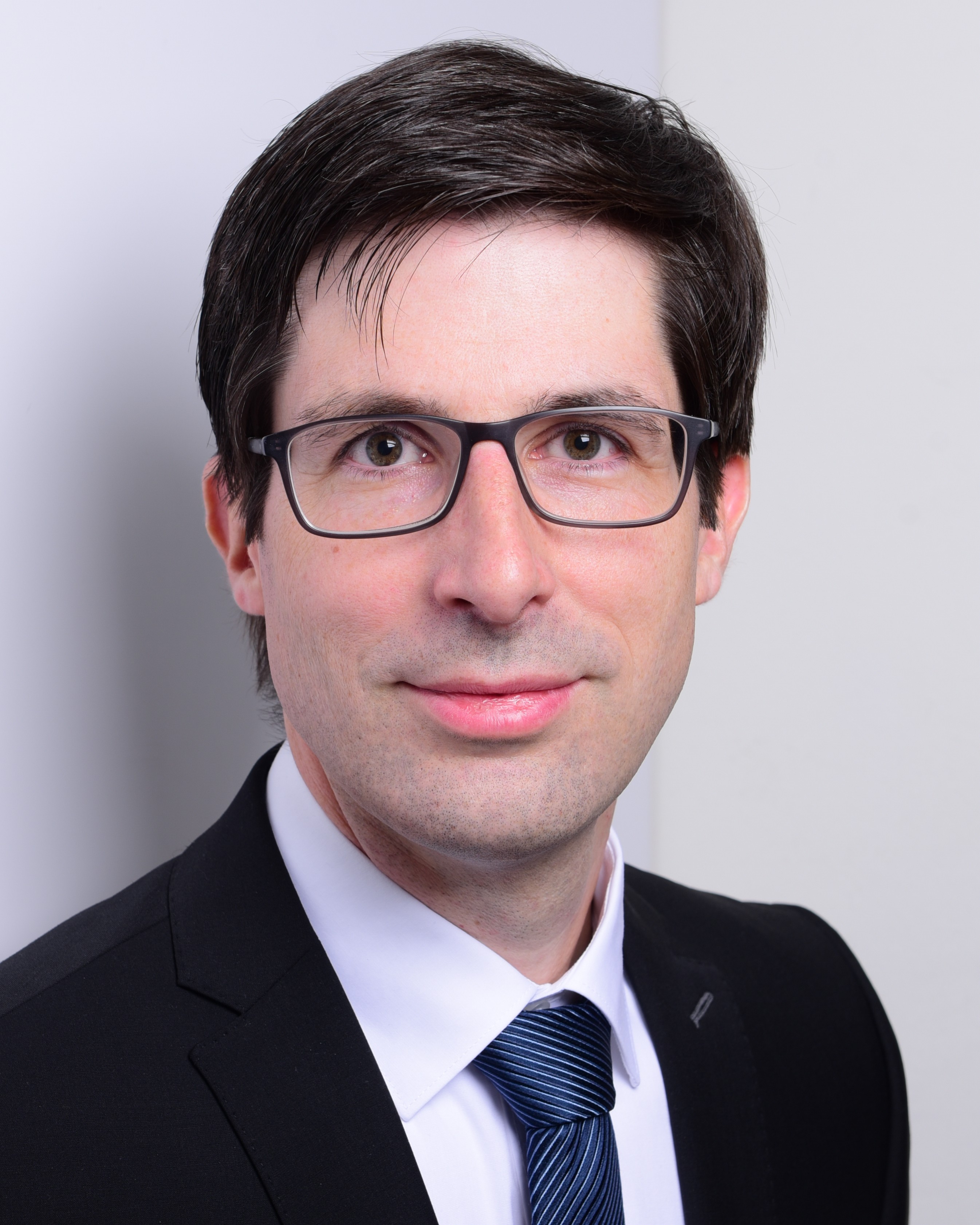
Prof. Dr. Jens Kirchner
Department of Information Technology, University of Applied Sciences and Arts Dortmund, Germany Chair of Smart Electronics and Systems, Friedrich-Alexander-Universität Erlangen-Nürnberg, Germany

Anstract: Molecular communication (MC) denotes a young, biology-inspired research field in communication engineering, where information is encoded by use of molecules rather than electromagnetic fields. MC aims to complement classic forms of communication where these are limited by, e.g., strong signal attenuation or antenna size. A major field of application scenarios lies in data transmission and interfacing within the human body. In connection with body area networks and the Internet of (Medical) Things, this enables an "Internet of Bio-Nano-Things" (IoBNT). The talk will give an introduction to MC and IoBNT, outline its development in the past years and illustrate its potentials and challenges with the example of nanoparticles as information carriers. A particular focus will be put on experimental setups for MC and the development of biological-physical models of the transmission channel.

Keynote speech;
Functional Reconstruction Using Wireless Implantable Brain-machine Interfaces with ICT

29 September(2nd day of the conference), Afternoon session (TBD)

Prof. Masayuki Hirata M.D., Ph.D. & M.Eng.
Department of Neurological Diagnosis and Restoration,Graduate School of Medicine, Osaka University.

Anstract: Brain-machine interfaces (BMIs) are technologies that enable the control of devices through the decoding of brain signals, and they are expected to serve as a functional restoration technology for individuals with disabilities. By directly measuring brain signals using intracranially implanted electrodes, high-fidelity neural signals can be acquired, enabling accurate device control. To transmit these intracranially measured brain signals to an external processing unit, wireless data communication is an essential technology, requiring both high speed and high reliability. To achieve this, we established the international standard IEEE 802.15.6ma for a high-speed and highly reliable Body Area Network (Dependable BAN). As a first step, we aim to commercialize implantable devices using Bluetooth Low Energy (BLE)-based data communication. In the next stage, we plan to develop next-generation devices utilizing Dependable BAN technology.
